
In the vast “nervous system” of electronic devices, diodes, as fundamental yet indispensable electronic components, are like “one-way valves” in precise circuits, controlling the direction and magnitude of the current.
The working principle of a diode: the cornerstone of current control
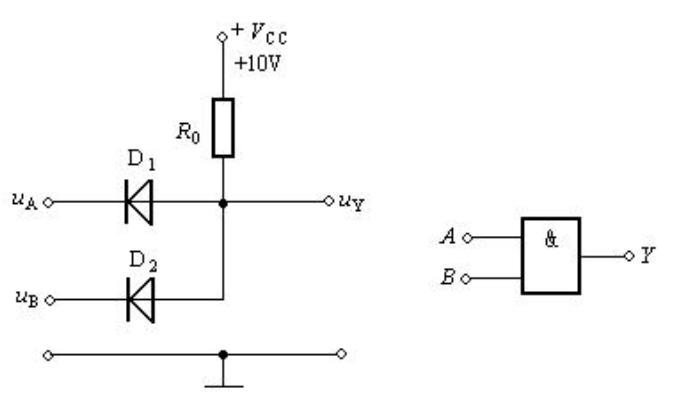
A diode is essentially a semiconductor device composed of a PN junction, corresponding electrode leads and a tube shell. When the P region (anode) of a diode is connected to a high potential and the N region (cathode) to a low potential, that is, a forward voltage is applied, the PN junction Narrows, allowing carriers (electrons and holes) to pass through smoothly, the diode conducts, and the current flows smoothly. Conversely, when a reverse voltage is applied, the PN junction widens, making it difficult for carriers to pass through, the diode cuts off, and the current almost cannot pass through. This unique unidirectional conductivity property makes it a core component for realizing functions such as rectification, voltage stabilization, limiting, and detection in electronic circuits.
Classification of diodes: Meeting diverse circuit requirements
Classified by material
Silicon diodes: Diodes made of silicon materials feature low reverse leakage current and good thermal stability, and are widely used in rectifier circuits and voltage stabilizing circuits of various electronic devices. Its conduction voltage is approximately 0.6 to 0.7 volts, making it suitable for circuit environments with high stability requirements.
Germanium diode: The conduction voltage of germanium diodes is relatively low, approximately 0.2 to 0.3 volts, and they perform well in high-frequency signal processing and small-signal detection circuits. However, its reverse leakage current is relatively large and its thermal stability is relatively poor. Attention should be paid to the working temperature range when in use.
Classified by use
Rectifier diode: Mainly used to convert alternating current to direct current, it is commonly found in power adapters, switching power supplies and other devices. The characteristics of a rectifier diode are that it allows a relatively large current to pass through, has a high reverse breakdown voltage value, and can withstand a large power.
Voltage stabilizing diode: By taking advantage of the characteristic that the voltage across a diode remains basically constant when it is broken down in reverse, the function of stabilizing voltage is achieved. In the power circuits of electronic devices, voltage stabilizing diodes are often used to provide a stable reference voltage for specific circuits.
Light-emitting diode (LED) : This is a special type of diode capable of converting electrical energy into light energy. With the development of technology, LED has not only shone brightly in the field of lighting, but is also widely used in display, signal indication and other fields. Leds of different colors can achieve brightness adjustment and color change by controlling the current size.
Light-emitting diode (LED) : This is a special type of diode capable of converting electrical energy into light energy. With the development of technology, LED has not only shone brightly in the field of lighting, but is also widely used in display, signal indication and other fields. Leds of different colors can achieve brightness adjustment and color change by controlling the current size.
Key points for diode selection: Precisely match the circuit requirements
Determine the working parameters
When choosing a diode, it is essential to first clarify parameters such as the operating voltage, current, and frequency of the circuit. Select a diode with a sufficient reverse withstand voltage value based on the maximum reverse voltage of the circuit to ensure that the diode will not be reverse broken down in the circuit. Select the appropriate rated forward current based on the operating current of the circuit to prevent the diode from being damaged due to overheating. For instance, when designing a power circuit with an output voltage of 12V and an output current of 1A, a rectifier diode with a reverse breakdown voltage greater than 12V and a rated forward current greater than 1A should be selected.
Consider the working environment
The performance requirements for diodes vary in different working environments. If the circuit operates in a high-temperature environment, silicon diodes with good thermal stability should be selected. If the circuit has a high requirement for signal response speed, Schottky diodes or fast recovery diodes with fast switching speed should be selected. In addition, environmental factors such as humidity and vibration of the circuit should also be taken into account, and diodes with corresponding protection grades should be selected.
Combined with the circuit function
Select the appropriate type of diode according to the specific function of the circuit. If rectification function is to be achieved, a rectifier diode should be selected. A stable voltage is required, and a voltage stabilizing diode should be selected. Signal detection is required, and a detection diode should be selected. At the same time, other characteristics of the diode, such as forward voltage drop and reverse leakage current, should also be taken into account to ensure that the diode can operate normally in the circuit and achieve the expected functional effect.
As a key player in the field of electronic components, the principle, classification, application and selection of diodes all involve rich knowledge and technology. With the continuous development of electronic technology, the performance of diodes is constantly improving, and new application scenarios are constantly emerging. Whether you are an electronic engineer, an electronics enthusiast, or a practitioner in the technology industry, a deep understanding of diode-related knowledge will provide a solid foundation for electronic circuit design, product development, and technological innovation, and help you explore and move forward in the vast field of electronic technology.